Fitness Trackers for Small Wrists: Less Bulk, a Better Fit
For a small wrist, case size matters as much as strap size.

A shorter strap only solves half the problem
A strap may fasten around your wrist while the tracker itself still feels too large. The case can overhang the sides, stand high above the skin or slide around as you move.
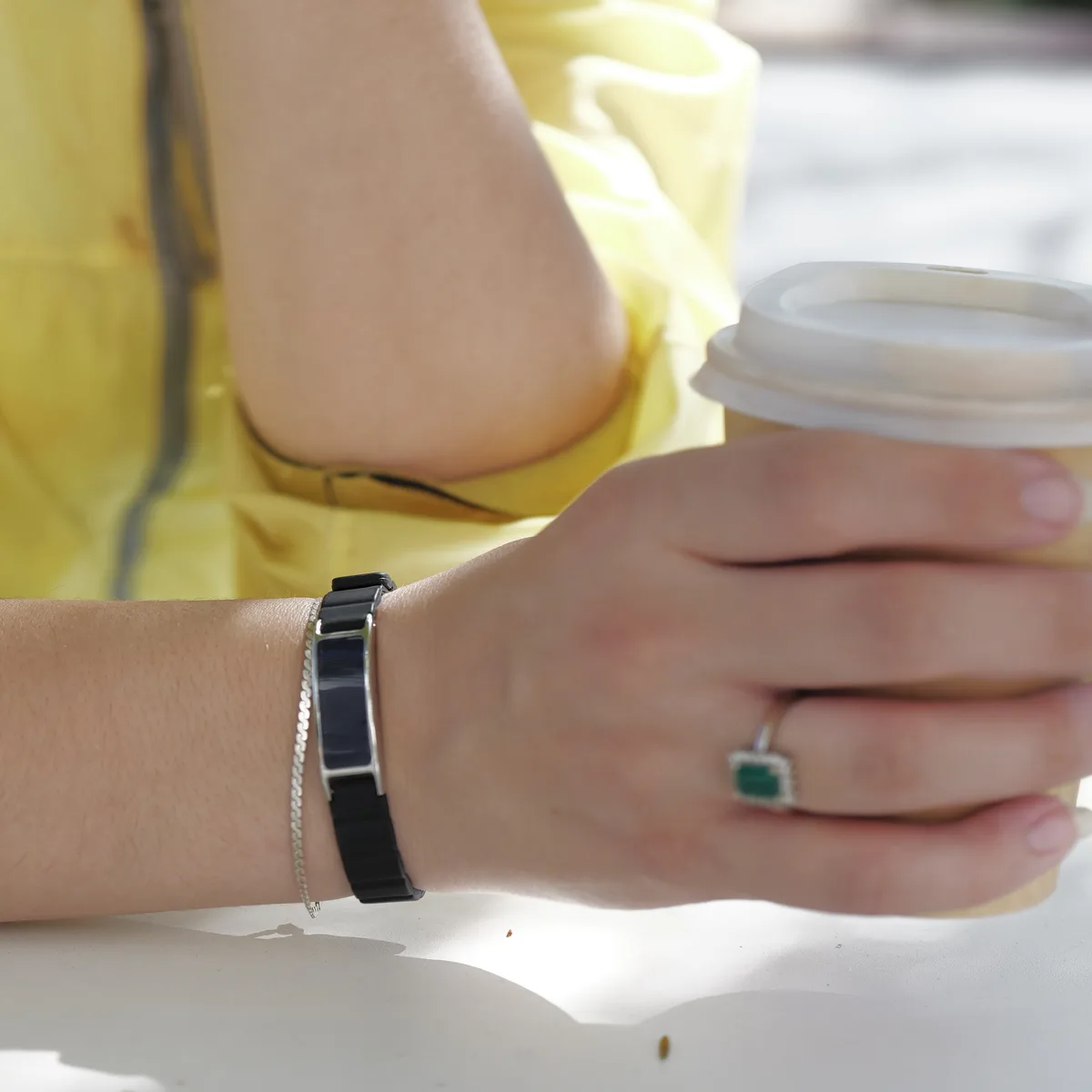
That is why it helps to compare the whole device, rather than choosing the smallest band option and hoping for the best.
Check these three dimensions
Length: look at how much of your wrist the case covers, including the points where the band attaches. The strap should be able to curve down around your wrist.
Height: a thick case feels more prominent and can catch on cuffs. Side-view photos are useful here.
Band range: check the supported wrist circumference and how closely the strap adjusts. You want a comfortable setting between slipping and squeezing.
Why a lightweight tracker helps
A lighter case puts less weight on the band and can feel less distracting as you move. A close fit also helps prevent the loose-bangle feeling that makes some trackers annoying to wear all day.
Ray is a 7-gram, screenless tracker designed to sit close to the wrist. It keeps sleep, activity and heart-rate information in its app, so there is no large display to fit onto a small wrist.
Before you choose
Measure your wrist and compare it with the current band options. If you are unsure about Ray's fit, send us your wrist measurement.
Then consider your normal day: typing, sleeping, getting dressed and moving your arms. A good fit should feel comfortable through all of them.