Screenless Fitness Trackers: What You Gain by Losing the Screen
Track your sleep and activity without another screen lighting up your wrist.

Why go without a screen?
You want to record a run, get dressed for dinner and go to bed without thinking about your tracker. A screenless band makes that easier: there is no watch face to wake up when you move, and no display competing with the watch or jewelry you already wear.
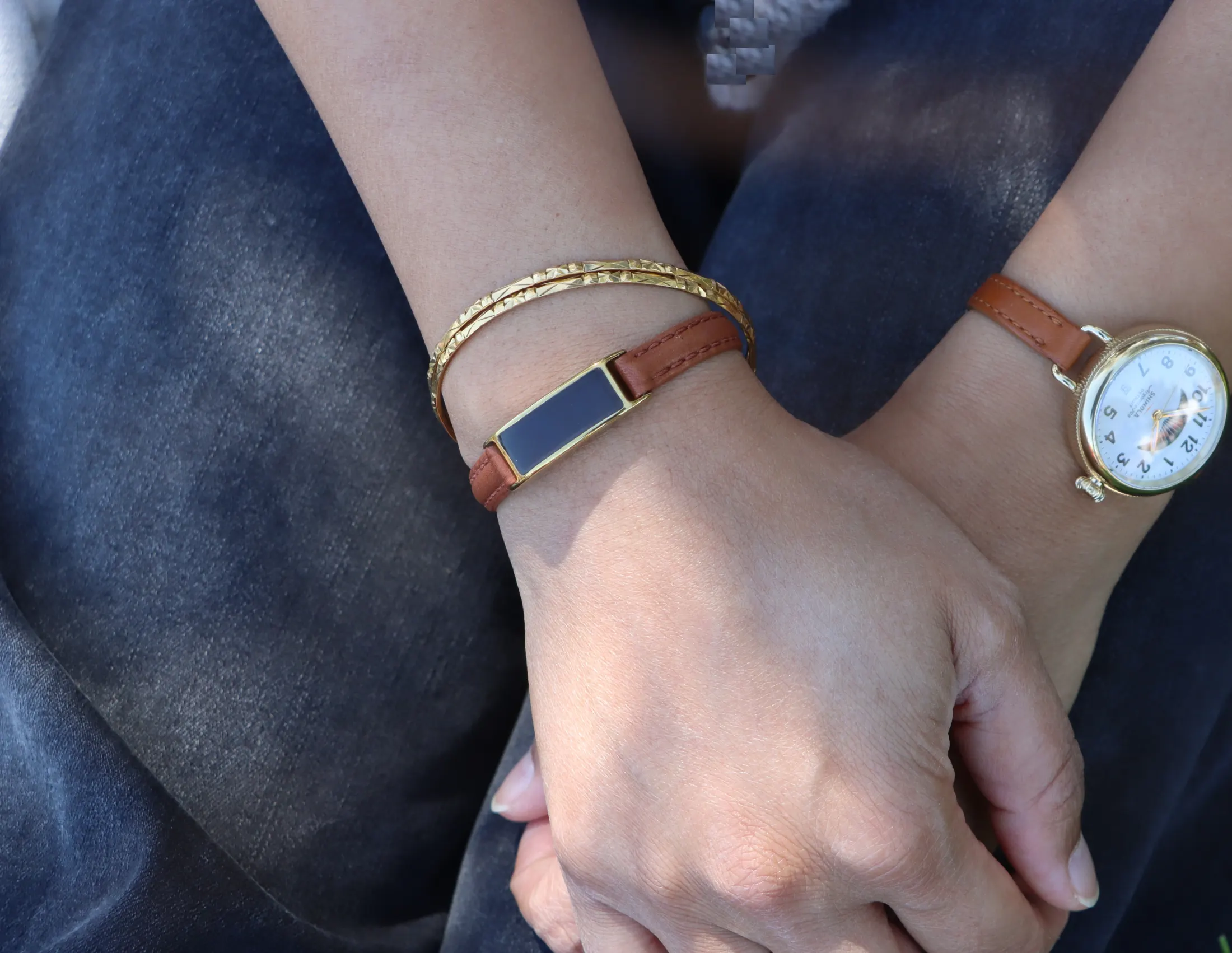
Removing the screen also gives designers more room to make a device small and efficient. Battery life still depends on the sensors and settings, but a bright display is one less thing to power.
What do you give up?
You will usually open your phone to see your results. If you check your pace mid-run or use a wrist timer every day, a screen can be worth the extra size.
Screenless trackers also differ in how they handle alerts. Some vibrate or use indicator lights, so check the model if you want a silent alarm or fewer interruptions.
Where Ray fits
Ray is a 7-gram, screenless wrist tracker. It records sleep, heart rate, HRV, temperature trends, activity and light exposure, with the details in its companion app.
It also uses light for power. About 1–2 minutes of direct sunlight can replenish a day's use under our test settings. Ordinary room lighting is not enough; see how Ray charges for shade and window timings.
Choose for the way you use a tracker
If you want information during a workout, a display may suit you. If you mostly look at your sleep and activity afterward, a screenless tracker can give you a quieter, more discreet way to keep recording.