Tired of Charging Your Fitness Tracker? Meet Light-Powered Ray
Taking your tracker off to charge is easy. Remembering to put it back on is the hard part.

The tracker that never makes it back onto your wrist
The battery runs low. You take the band off, put it beside your laptop and get on with your day. A few days later, you remember you wanted to see how you slept. There is nothing to look at: the tracker was on the desk.
If that sounds familiar, the missing feature may be a simpler way to keep wearing the device. A tracker with more charts still needs to be on your body to collect them.
A fitness tracker that doesn't need plugging in
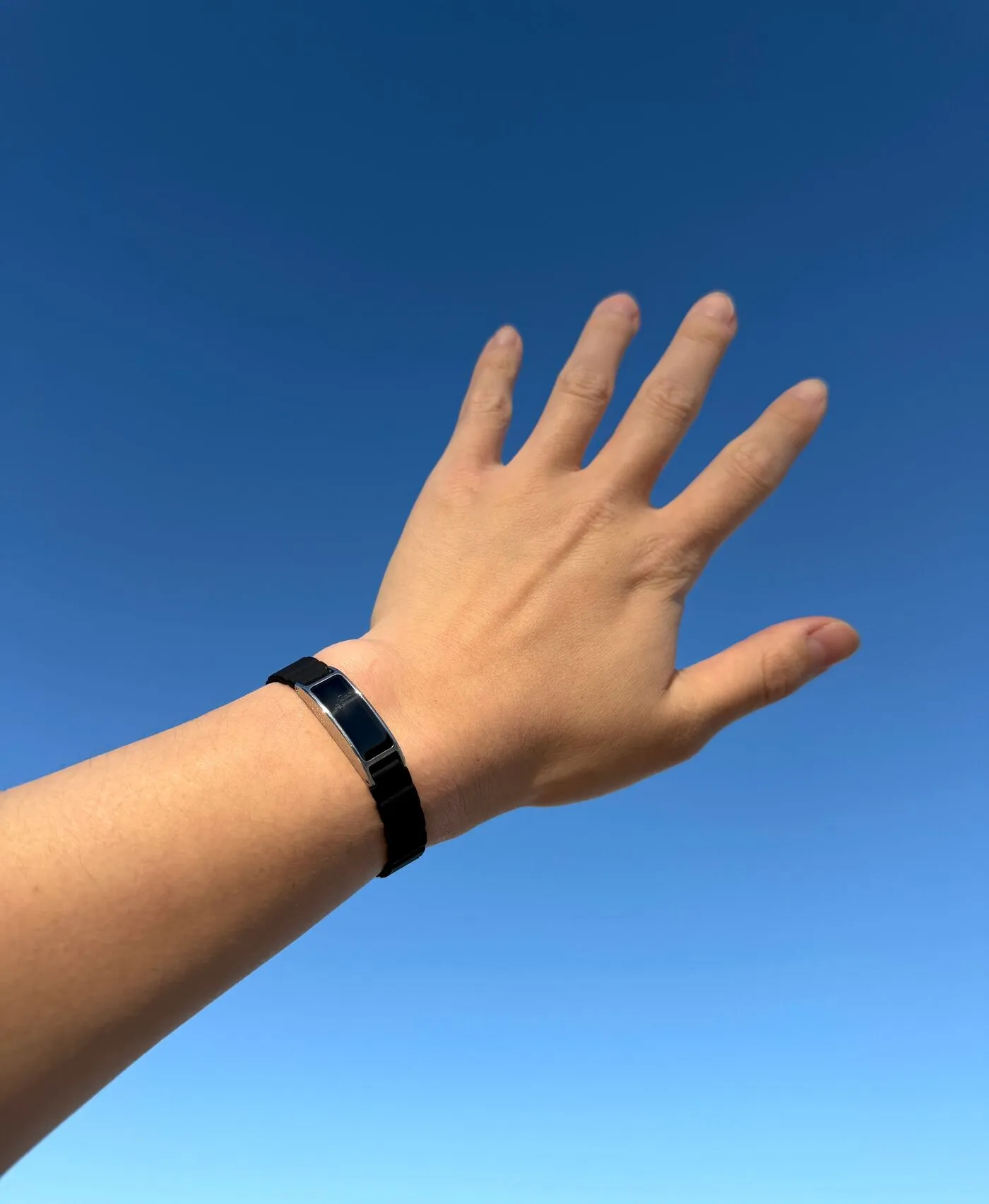
Ray is a screenless wrist tracker powered by light. Under our test settings, roughly 1–2 minutes of direct sunlight replaces one day of use. Outdoor shade takes about 10–15 minutes; bright daylight beside a window takes about an hour.
These are daily top-ups, not full-charge times. Ordinary indoor lighting is not enough. Clothing, weather, angle and settings affect the energy collected. The sun, shade and window tests explain the conditions.
A full battery provides about two months of reserve, depending on settings and use. That gives you room for darker days and changes in routine without needing to hit a sunlight target every day.
Make the easy habit the useful one
Let the panel see daylight during something you already do: a walk, a coffee outside or time beside a bright window. Check the battery trend in the app occasionally. If it is falling over time, give Ray more light.
You still need to take the tracker off when appropriate for cleaning or comfort. The difference is that a charging cable does not have to interrupt your routine.
What keeps recording when you keep wearing it?
Ray tracks sleep, heart rate, HRV, temperature trends, activity and light exposure, with results in its companion app. Its seven-gram device keeps the hardware small; the band adds to the total worn weight.
For someone who has repeatedly abandoned a tracker, the useful question is simple: what made you stop wearing the last one? If it was charging, this is the part Ray was built to change. If it was discomfort, start with fit and sensory comfort instead.