Best Ankle Fitness Trackers: Keep Your Wrists Free
For people who dislike wristbands or want to keep wearing a watch: your ankle options, how to fit a band, and what to check first.

Can you wear a fitness tracker on your ankle?
Sometimes. A tracker will physically go on an ankle if its band is long enough, but most are designed and tested for the wrist. Before you move one, check three things: the band's length, whether the sensor stays against your skin, and what the maker says about wearing it anywhere else.
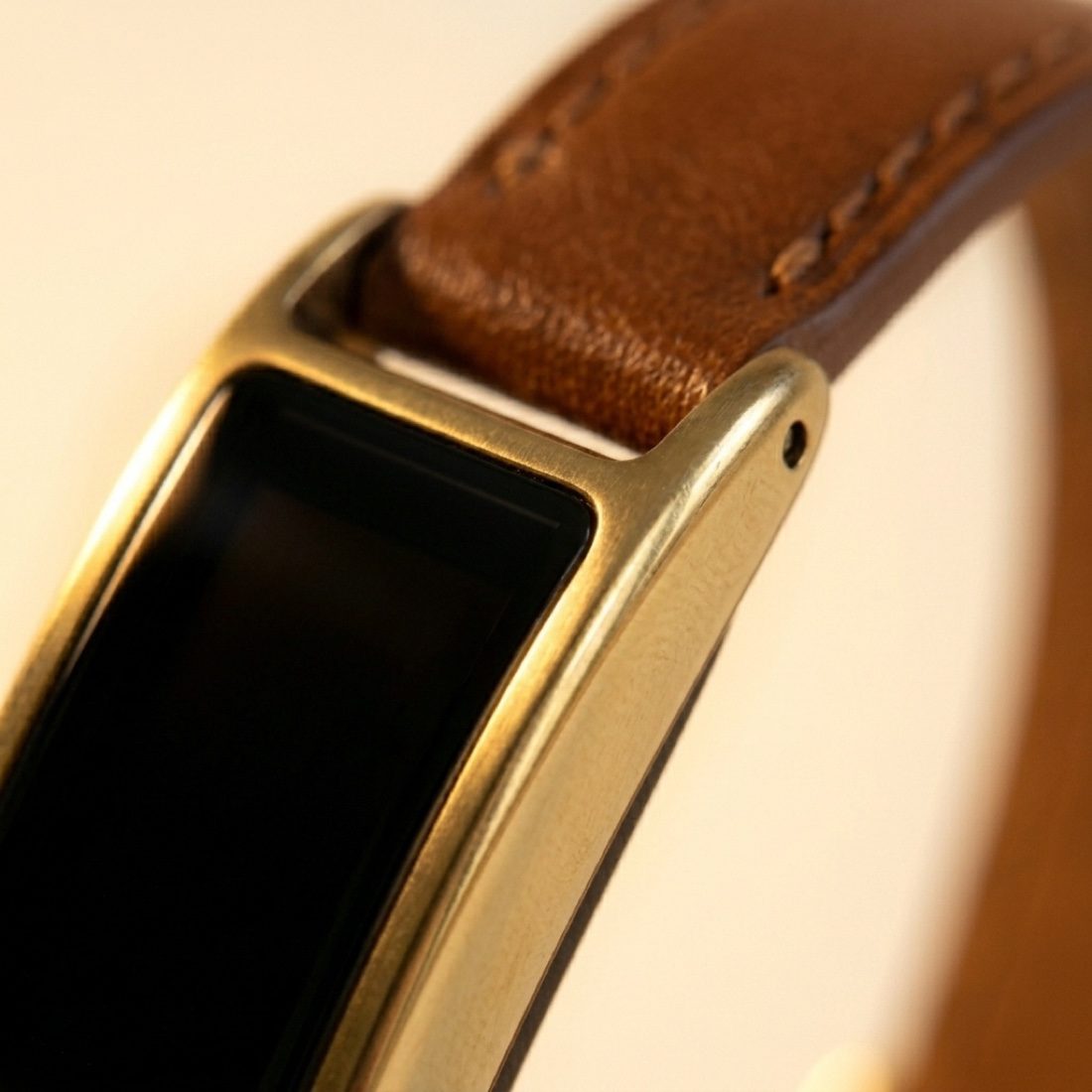
Ray can be worn on an ankle with a suitable band. The details are below, along with the limits.
Why people move a tracker to the ankle
- Your hands are on a stroller, cart or walker. Wrist trackers rely on wrist movement to count steps, so they can miss steps when your arms are not swinging.
- Your job does not allow anything on your wrists. Some clinical, food and workshop roles ask for bare wrists.
- Your wrist is taken. You wear a watch, bracelets or a brace there, or you dislike the feel of a band.
- You want it out of sight. An ankle band sits under a trouser leg or sock.
Your options
| Option | What it is | Keep in mind |
|---|---|---|
| A wrist tracker on a longer band | A standard tracker moved to the ankle with a band that fits | Check the maker's wearing instructions. If they describe only the wrist, treat ankle readings as untested. |
| Chargerless Ray | A 7-gram screenless tracker that takes standard 8 mm bands and can be worn on an ankle with a suitable band | Socks and trouser legs can cover the solar panel. We have not published a comparison of ankle and wrist readings. |
| A clip-on tracker | A tracker such as Bellabeat Leaf, clipped to clothing or worn as a necklace | Keeps wrists and ankles free. Check what it measures; a clip may not record heart rate. |
| A ring | A smart ring worn on a finger | Frees the wrist, but not suitable where rings are not allowed. |
Trackers built specifically for the ankle are rare. Moov Now, a screenless pod that could be worn on the wrist or ankle, is discontinued.
How to size an ankle band
Measure around your ankle just above the ankle bone, where the band will sit, and compare that with the band's adjustment range. A band that fits your wrist will often be too short.
Ray takes standard 8 mm bands. See Ray band compatibility and sizing, and choose a band long enough for your measurement.
Fit it the way you would on a wrist: the sensor should rest against your skin without squeezing or sliding. Our guide to how tight a tracker should be explains what to look for. Boots and tight cuffs can press on the case, so try it with the footwear you usually wear.
What is and is not known about ankle readings
Treat an ankle as a different measuring site, not the same reading from a new place.
- Steps: a tracker's step counting is tuned for where the maker expects it to be worn. Counts from the ankle can differ from the wrist.
- Heart rate and sleep: optical sensors are generally validated at the wrist. Do not assume the same accuracy at the ankle.
- Ray specifically: we have not published a comparison of Ray's readings at the ankle and the wrist. Ray can be worn there; that is a statement about fit, not about matched accuracy.
If you need readings you can compare over time, keep the tracker in one place rather than switching between wrist and ankle.
Charging a solar tracker on your ankle
Ray is powered by light, and an ankle is often covered. Socks and trouser legs can block the solar panel, so time outdoors with the panel covered does not count as charging.
Give the panel direct outdoor light when you want to top it up. About 1–2 minutes of direct sunlight can replenish a day's use under our test settings, and a full battery holds about two months of reserve, depending on settings and use. Read how Ray's solar charging works and the sun, shade and window timings.
Is Ray right for ankle wear?
It is a reasonable choice if you want a small, light tracker for sleep and everyday health trends and you can expose the panel to sunlight regularly. Ray is IP68 rated, has no screen to catch on clothing, and has no subscription.
Look elsewhere if you need validated ankle accuracy, named workout tracking, or a tracker that charges without light. Ray's stainless-steel case contains nickel, so do not use it if you have a nickel allergy, wherever you wear it.
For the short version, see can I wear Ray on my ankle?
Ray is a 7-gram screenless tracker that can be worn on an ankle with a suitable band.
See Ray options Ask a question