Chargerless Ray vs. Google Fitbit Air
Two screenless trackers for sleep and heart rate. Ray runs on outdoor light and has the narrower case. Fitbit Air starts at $99.99 and weighs less without its band.

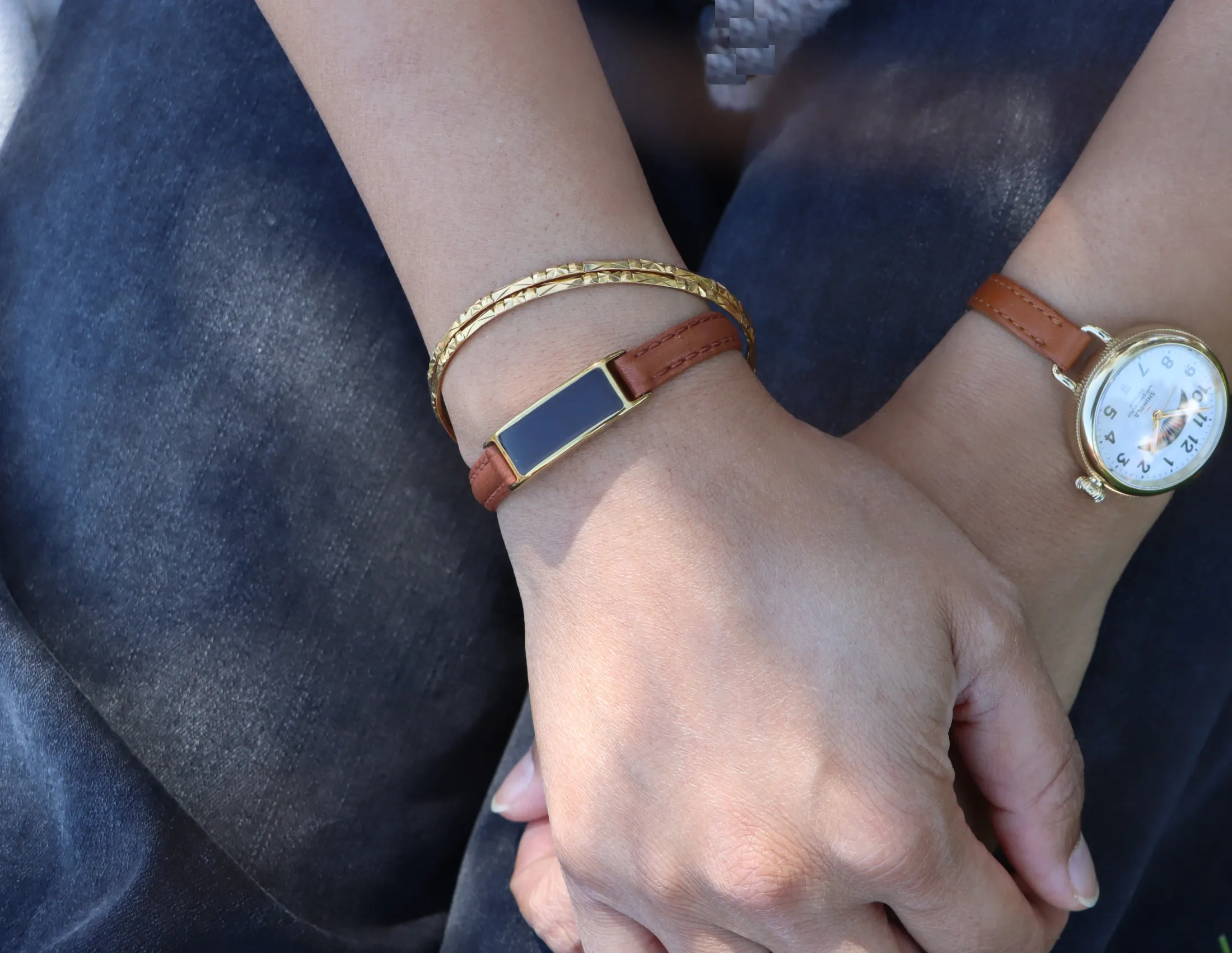
Both bands show your results on a phone, and neither requires a paid plan for heart rate or sleep. What the extra money buys with Ray is an 11 mm polished steel case, interchangeable 8 mm straps and a solar panel in place of a charging port. Both work with iPhone and Android.
The short answer
For a sleep score, estimated sleep stages and everyday heart rate on a budget, choose the standard Fitbit Air. Choose Ray if a wider sports band would stay in the drawer, or if taking a tracker off to charge is how you stopped wearing your last one. If metal mesh is the look you want, compare Google’s $149.99 bundle with the $219 silver Ray, a difference of $69.01. Ray is currently a US preorder.
Chargerless makes Ray. Sizes and weights are published specifications. Ray’s 7 g figure excludes its band. We have not weighed both finished bands together or tested their sleep-stage accuracy head to head.
Google Fitbit Air status: Currently sold.
Side by side
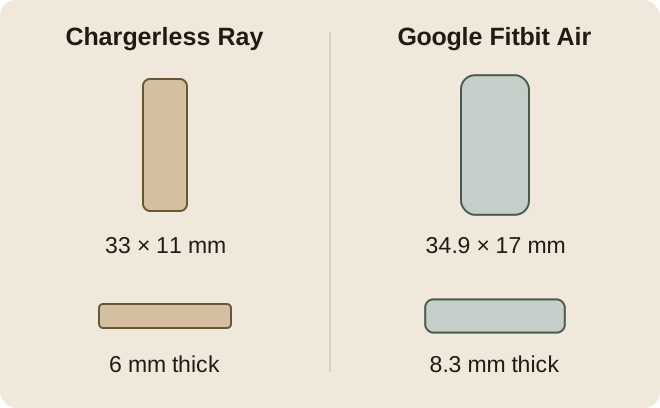
Specs are manufacturer claims and US pricing snapshots, not lab-test results. A blank promise is less useful than a clear tradeoff, so we keep this list deliberately practical.
| What changes | Chargerless Ray | Google Fitbit Air |
|---|---|---|
| Format | Screen-free wristband | Screenless sensor on a woven band; metal mesh also available |
| Power | Light powered; no charging routine | USB charger; up to seven days per charge |
| Case (length × width × height) | 33 × 11 × 6 mm | 34.9 × 17 × 8.3 mm |
| Screen | None | None |
| Weight | 7 g | 5.2 g without the band; 12 g with the standard band |
| US price | $219 silver / $249 gold | From $99.99; $149.99 with gold mesh and fabric loop |
| Required subscription | None | None for heart rate, sleep stages and sleep score; Google Health Premium is optional |
| Core tracking | Sleep, heart rate, HRV, temperature, steps and light exposure | Heart rate, resting heart rate, HRV, sleep stages, sleep score, steps and workouts |
Still weighing fitness trackers? Read what to look for in a tracker you'll want to wear every day.
Neither wins every category
The best tracker is the one whose compromises fit your life—and that you will actually keep wearing.
Why choose Ray
Ray’s polished case is 6 mm narrower. You can pair its 8 mm leather strap with a dress watch and give the panel some uncovered time outdoors during a walk instead of setting the band on a charger.
Why choose Google Fitbit Air
The standard Air costs $119.01 less than the silver Ray. If a weekly charging routine works for you, its free sleep score and stages may already cover everything you want.
Common questions
What do I see after a night of sleep?
Ray’s app shows your sleep and overnight heart-rate, temperature and stillness trends. On Fitbit Air, the free Google Health app shows sleep duration, estimated stages and a sleep score. Google Health Coach is an optional paid feature.
Will Ray run on indoor light at my desk?
Ordinary room lighting contributes little. In Chargerless tests, 1–2 minutes of direct outdoor sun could replace a day of use. Sleeves, shade and tracking settings affect that balance. The quoted reserve of up to about 60 days in darkness assumes a full charge and readings about every five minutes.
Research note. Competitor facts were checked against Google Store’s Fitbit Air technical specifications on November 3, 2026. Prices, promotions, regional features and announced-product timelines can change. Ray details reflect the current Chargerless product page. Neither product is a substitute for medical care.
- Google Store: US starting price, sleep metrics and optional coaching.
- Google’s metal mesh announcement: Finishes and US bundle price.
- Ray specifications: Case dimensions, weight and sensors.
- Ray light tests: Direct sun, shade and indoor conditions.
- Ray battery guidance: Dark-reserve settings and limitations.
- Chargerless shop: Current US preorder timing, finishes and bands.
Wear your health. Not a charger. Ray tracks the essentials in a 7-gram bracelet powered by light. Silver starts at $219. Gold starts at $249. No required subscription.
See Ray options Browse all 39 comparisons