Best Fitness Tracker for Seniors: Less Charging, Less Fuss
Everyday health tracking with fewer charging chores.

Start with the daily chore you want to remove
A fitness tracker is only useful if it is comfortable enough to wear and simple enough to keep using. If remembering a charging cable is the frustrating part, a light-powered tracker offers a different routine.
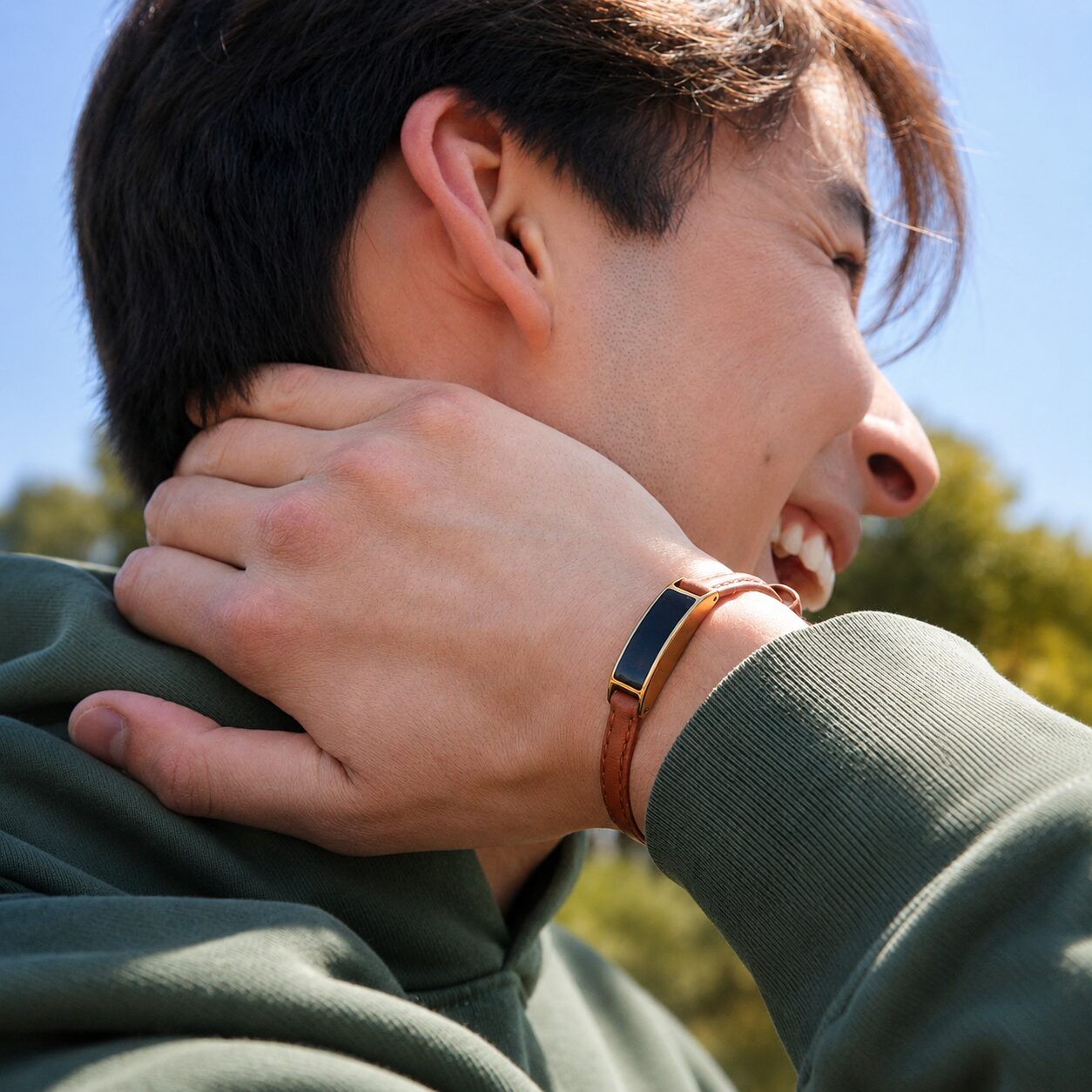
Ray collects energy from daylight. Under our test settings, around 1–2 minutes of direct sunlight replaces a day’s use. Outdoor shade takes around 10–15 minutes, and bright daylight beside a window takes roughly an hour. Ordinary indoor lighting is not enough.
Why Ray suits someone who dislikes charging
From a full charge, Ray can have about two months of reserve at roughly five-minute sampling intervals. More frequent sampling, step counting and Bluetooth reconnects can shorten that. Check the battery in the app rather than assume daylight always covers your use.
A small, screenless device also avoids tiny on-wrist menus. Ray records sleep, heart rate, HRV, temperature trends, activity and light exposure; you review the details in its companion app.
Try the app and fastening before deciding
Removing a screen moves the information to a phone. That is convenient for someone comfortable using an app, but it may not suit someone who wants a step count visible on their wrist.
Check whether the app is easy for the intended wearer to read and navigate. Try the band fastening, check the wrist measurement and make sure they can put it on comfortably. Age alone does not tell you which interface or strap someone will prefer.
Buying for a parent or partner
Set up the supported phone and app together, demonstrate syncing, and show where to find the battery level. Agree on a simple daylight routine that works with their day. A tracker kept under a sleeve or worn mostly in a dim room will need deliberate light exposure.
Do not assume that a fitness tracker sends emergency alerts or lets a family member monitor the wearer remotely. This guide recommends Ray for everyday tracking and fewer charging chores; it is not an emergency-response recommendation.
Our pick for fewer charging chores
Choose Ray if the appeal is a lightweight device, app-based readings and no dedicated charging cable. Check the app and band fit first. If you need a large wrist display or specific emergency features, make those requirements part of the purchase decision.
See how solar charging works and fit advice for small wrists.