Chargerless Ray vs. Garmin CIRQA
Two screen-free bands with no required subscription. Garmin CIRQA brings Garmin Connect for $199.99 and lasts up to 10 days per charge. Ray runs on light, and its module weighs less than half as much.

Garmin launched CIRQA in July 2026 as its first screen-free smart band. It costs $199.99, needs no subscription, and sends sleep, HRV status, Pulse Ox, Body Battery and training readiness to the Garmin Connect app. Ray is also screen-free and subscription-free. It is powered by light instead of a charger, and its Airplane Mode switches Bluetooth off completely while it keeps recording. Both work with iPhone and Android.
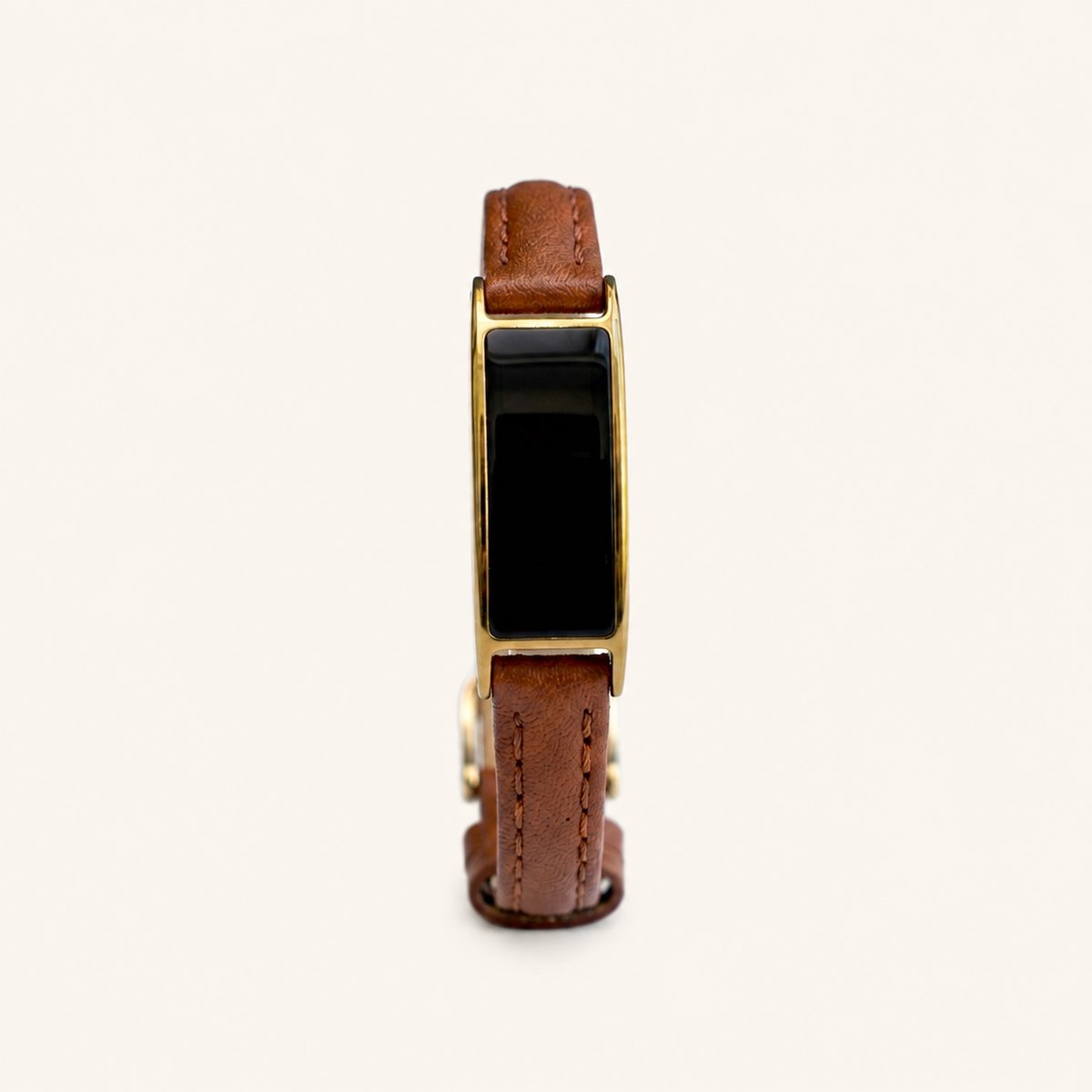
The short answer
Choose CIRQA if you train with Garmin Connect and want training readiness, VO2 max and automatic workout detection from a band that costs a little less. Choose Ray if taking a tracker off to charge is how you stopped wearing your last one, if you want a smaller polished-steel case, or if you want to switch Bluetooth off and keep recording.
Chargerless makes Ray. CIRQA facts are Garmin’s published specifications. Ray’s 7 g figure excludes its band. We have not tested the two bands side by side.
Garmin CIRQA status: Currently sold.
Side by side
Specifications and US prices are each maker's own, checked November 12, 2026.
| What changes | Chargerless Ray | Garmin CIRQA |
|---|---|---|
| Format | Screen-free wristband | Screen-free smart band; wrist band included, upper-arm band sold separately |
| Power | Light powered; no charging routine | Rechargeable; up to 10 days per charge; Garmin proprietary plug charger, up to 90 minutes to charge |
| Screen | None | None |
| Module size, as each maker lists it | 33 × 11 × 6 mm (length × width × height) | 27 × 47 × 9 mm (Garmin does not name the axes); wrist bands fit 120–200 mm (S-M) or 145–240 mm (L-XL) |
| Weight | 7 g | 14.8 g module; 20.7–21.2 g with wrist band |
| US price | $219 silver / $249 gold | $199.99 |
| Required subscription | None | None; Garmin Connect+ plan optional |
| Core tracking | Sleep, heart rate, HRV, temperature, steps and light exposure | Sleep stages and score, heart rate, HRV status, Pulse Ox, skin temperature, stress, Body Battery, respiration, steps and auto-detected activities |
| Sensors | Heart-rate, temperature, step-counting and light-exposure sensors | Wrist-based heart rate, Pulse Ox blood-oxygen monitor, skin temperature and accelerometer |
| Bluetooth controls | Airplane Mode switches Bluetooth off completely while Ray keeps recording; communication can also be reduced to once every several hours | Bluetooth and ANT+; syncs with Garmin Connect periodically and automatically. Garmin’s manual lists no Bluetooth-off or airplane setting |
| Power use in our comparison | 15 µW with heart-rate sampling every four minutes and step counting off | About 2,040 µW, estimated from total stored battery energy divided by reported runtime |
Still comparing? See fitness trackers without Bluetooth, turning Bluetooth off on a fitness tracker, Ray vs. Polar 360 and Ray vs. Morpheus M7.
Neither wins every category
The best tracker is the one whose compromises fit your life—and that you will actually keep wearing.
Why choose Ray
Ray has no charger to return to, while Garmin lists CIRQA at up to 10 days per charge. Ray’s module weighs 7 g against CIRQA’s 14.8 g, and its Airplane Mode switches Bluetooth off completely while Ray keeps recording.
Why choose Garmin CIRQA
CIRQA costs $19.01 less than the silver Ray and brings Garmin Connect: training readiness, VO2 max, HRV status, Pulse Ox, more than 80 activity types and an upper-arm band option for sleep.
Five-year cost
A simple comparison using today's US list prices.
- Chargerless Ray: $219–$249
- Garmin CIRQA: $199.99
Garmin’s $199.99 US list price with no required subscription. The optional Garmin Connect+ plan, taxes, extra bands and replacement hardware are excluded.
Common questions
Does Garmin CIRQA need a subscription?
No. Garmin sells CIRQA with no subscription required. An optional Garmin Connect+ plan adds features such as live activities, Garmin Coach training plans, nutrition tracking and Active Intelligence insights. Ray has no subscription; you pay once.
How long does the Garmin CIRQA battery last?
Garmin lists up to 10 days per charge. Its proprietary charger can take up to 90 minutes to charge the band. Ray is powered by light and has no charger; a full charge holds up to about 60 days of reserve, depending on settings and use.
Does Garmin CIRQA have a screen?
No. CIRQA uses an LED and vibration for status and alerts, and shows your data in the Garmin Connect app. Ray has no screen either and shows your results in its app.
Can I turn Bluetooth off?
On Ray, yes. Airplane Mode switches Bluetooth off completely, Ray keeps recording, and data comes off when you start a sync. You can also reduce Ray’s Bluetooth communication to once every several hours. Garmin’s CIRQA manual describes automatic, periodic syncing with the Garmin Connect app and lists no Bluetooth-off or airplane setting.
How does Ray’s power use compare with Garmin CIRQA?
Our comparison puts Ray at 15 µW with heart-rate sampling every four minutes and step counting off. We estimate CIRQA’s average power at about 2,040 µW by dividing its total stored battery energy by its reported runtime. By those figures Ray uses about 1/136 of CIRQA’s power. Features and settings differ, so this is not an identical-feature test, and power use does not measure Bluetooth emissions or exposure.
How much does Garmin CIRQA cost?
Garmin listed CIRQA at $199.99 in the US when checked. Ray is $219 in silver or $249 in gold.
Sources. Garmin CIRQA facts were checked against Garmin’s CIRQA Smart Band product page and specifications on November 12, 2026. Ray details reflect the current Chargerless product page.
- Garmin CIRQA product page: US price, battery, charger, weight, size, sensors, connectivity and optional Connect+ features.
- Garmin CIRQA owner’s manual: Charging time, automatic syncing, status LED and specifications.
- Garmin CIRQA announcement: Launch, no required subscription, activity types and wrist or arm wear.
- Chargerless power comparison: Ray 15 µW and CIRQA 2,040 µW estimate, with method and limits.
- Ray Bluetooth controls: Airplane Mode and communication interval.
- Ray specifications: Case dimensions, weight and sensors.
Wear your health. Not a charger. Ray tracks the essentials in a 7-gram bracelet powered by light. Silver starts at $219. Gold starts at $249. No required subscription.
See Ray options Browse all 40 comparisons Compare all fitness trackers on one chart