Garmin CIRQA vs Fitbit Air: Screenless Bands Compared
Garmin CIRQA and Google Fitbit Air are two major subscription-free screenless wrist bands. Compare their size, weight, 10- vs. 7-day battery, and Chargerless’s power comparison alongside 6.0 mm solar-powered Chargerless Ray.

Garmin CIRQA ($199.99) and Google Fitbit Air (from $99.99) represent two distinct takes on the modern, subscription-free screenless wrist band. Fitbit Air aims for minimal weight, low price and effortless everyday sleep scores. Garmin CIRQA brings Garmin Connect’s deeper training readiness, Pulse Ox, Body Battery and 10-day battery in a noticeably larger athletic band. Putting Chargerless Ray ($219–$249) alongside both highlights a third option: an even slimmer 6.0 mm polished steel band that runs from outdoor light and adds a full Bluetooth-off Airplane Mode.
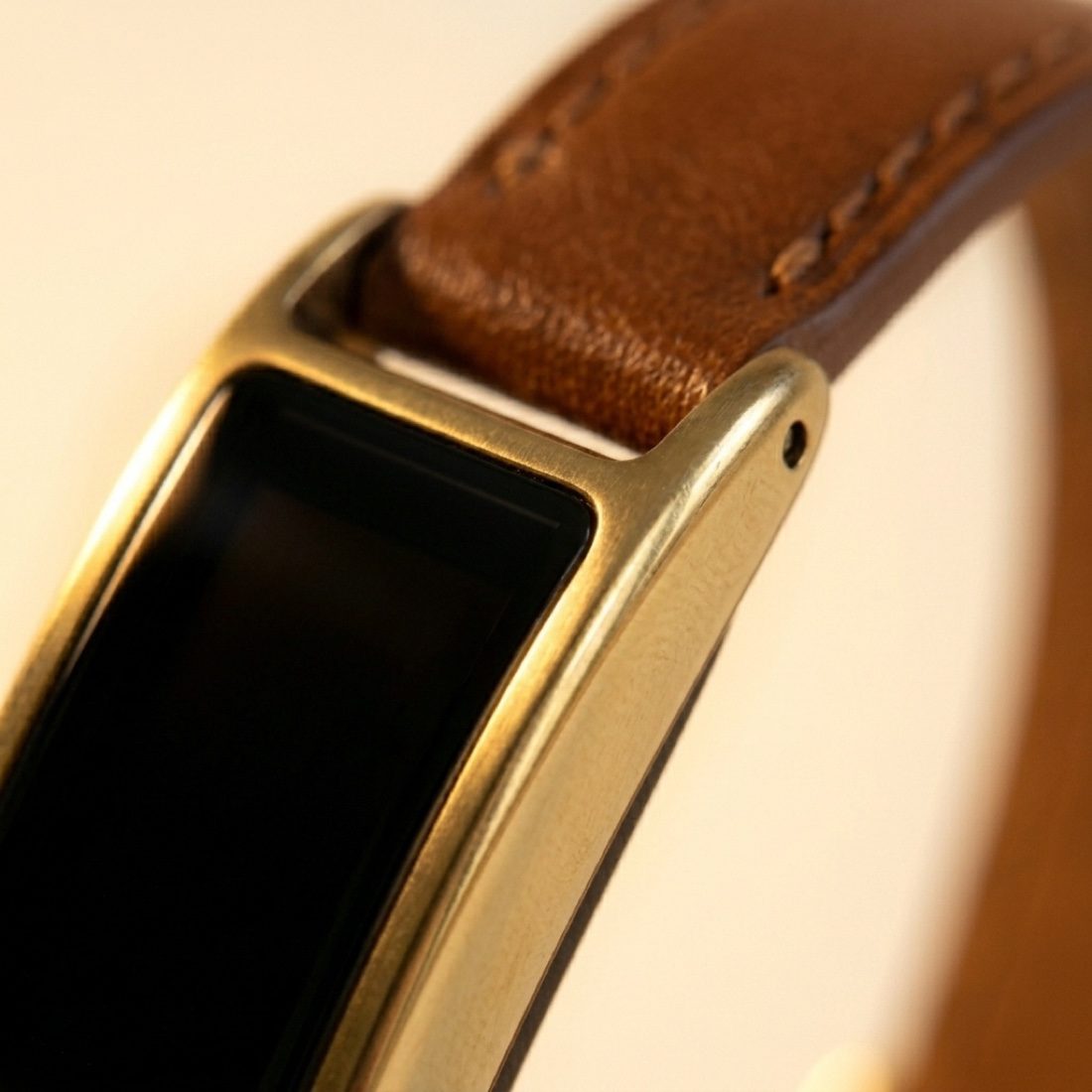
Garmin CIRQA vs. Google Fitbit Air vs. Chargerless Ray
| Spec | Chargerless Ray | Google Fitbit Air | Garmin CIRQA |
|---|---|---|---|
| Case size (L × W × H) | 33 × 11 × 6.0 mm | 34.9 × 17 × 8.3 mm | 47 × 27 × 9.0 mm (module) |
| Weight | 7 g (case) | 5.2 g module / 12 g with band | 14.8 g module / 20.7–21.2 g with band |
| Battery & charging | Solar (~60 days dark reserve; no port) | Up to 7 days (USB charger) | Up to 10 days (proprietary plug, up to 90 min) |
| Chargerless power comparison* | 15 µW (4-min HR, steps off) | 790 µW est. (~53×) | 2,040 µW est. (~136×) |
| US starting price | $219 silver / $249 gold | From $99.99 ($149.99 gold mesh) | $199.99 |
| Required subscription | None | None for core (Google Health Premium optional) | None (Garmin Connect+ optional) |
| Core tracking | Sleep, HR, HRV, temperature trends, steps, cycle tracking, light exposure | HR, resting HR, HRV, sleep stages & score, skin temp variation, steps, workouts, cycle tracking | Sleep stages & score, HR, HRV status, Pulse Ox, skin temp, stress, Body Battery, respiration, steps, 80+ activities, cycle tracking |
| Bluetooth-off Airplane Mode | Yes (records offline until manual sync) | Not listed | Not listed in owner’s manual |
*Chargerless’s power comparison: competitor figures are estimated from total stored battery energy divided by reported runtime; Chargerless Ray’s 15 µW uses four-minute heart-rate sampling with step counting off. Features and settings differ across devices, so this is not an identical-feature test and electrical power does not measure RF emissions or exposure. See Ray vs. Garmin CIRQA and Ray vs. Google Fitbit Air.
Size, weight and wrist presence
On paper both CIRQA and Fitbit Air are “screenless bands,” yet on your wrist they feel like different weight classes:
- Google Fitbit Air measures 34.9 × 17 × 8.3 mm and weighs 5.2 g bare (12 g with its standard woven band). It is compact enough to pair comfortably with smaller wrists or a watch on the opposite arm, and Google also offers a $149.99 gold mesh and fabric loop edition.
- Garmin CIRQA stretches to 47 × 27 × 9.0 mm (module without strap) and weighs 14.8 g bare (20.7–21.2 g with its wrist band). It sits roughly 10 mm wider across your wrist than Fitbit Air and uses an LED plus vibration for status and alerts. Garmin also sells an optional upper-arm band for sleep or sports where you want bare wrists.
- Chargerless Ray is the narrowest and flattest of the three at 33 × 11 × 6.0 mm and 7 g (case only) — 2.3 mm flatter than Fitbit Air and 3.0 mm flatter than CIRQA. See how all wrist trackers stack up by height in our low-profile fitness tracker guide and by grams in our lightweight fitness tracker ranking.
Battery life, charging cables and electrical power
Garmin CIRQA gives you up to 10 days per charge via Garmin’s proprietary plug charger (taking up to 90 minutes to charge). Google Fitbit Air lists up to 7 days per charge via USB — see our Fitbit Air battery life guide for what trims real-world runtime.
Chargerless Ray eliminates the charging cable completely. In Chargerless’s power comparison (shown in the table above), Ray draws 15 µW at four-minute heart-rate sampling with step counting off, versus Chargerless’s average-power estimates (stored battery energy ÷ reported runtime) of 790 µW for Google Fitbit Air (~53×) and 2,040 µW for Garmin CIRQA (~136×). Again, the three bands run different sensor suites and sampling settings — this is not an identical-feature test and does not measure Bluetooth RF exposure — yet that ultra-low power budget is what lets 1–2 minutes of direct outdoor sunlight replace roughly a day of Ray operation under Chargerless test settings, backed by up to about 60 days of dark reserve (see sun, shade and window tests).
Sensors, training apps and Bluetooth control
- Pick Garmin CIRQA ($199.99) if you want Garmin Connect’s full athletic ecosystem without a watch face: training readiness, VO2 max, Body Battery, Pulse Ox, HRV status, 80+ activity types and an upper-arm strap option, with no required membership.
- Pick Google Fitbit Air (from $99.99) if you want the lowest upfront price, a featherlight 12 g banded weight, and free sleep stages and sleep score in Google Health — and a weekly USB charge works for you.
- Pick Chargerless Ray ($219 silver / $249 gold) if you want the thinnest, most jewelry-like screenless band (6.0 mm tall, 11 mm wide), zero cable charging, no subscription, Airplane Mode that turns Bluetooth off completely while recording (plus adjustable communication intervals down to once every several hours), all-interval charts, full data export, and Apple Health, Google Health Connect and Samsung Health syncing. Note that Ray’s stainless-steel case contains nickel (do not wear with a nickel allergy) and currently ships within the United States.
Explore more screenless options in our best screenless fitness trackers guide, compare every battery spec in longest battery life fitness trackers, or filter all bands interactively on the fitness tracker comparison chart.
Frequently asked questions
What is the biggest difference between Garmin CIRQA and Google Fitbit Air?
Price, footprint and ecosystem. Google Fitbit Air starts at $99.99 in a compact 34.9 × 17 × 8.3 mm case (5.2 g module) with up to 7-day battery and Google Health sleep scores. Garmin CIRQA costs $199.99 in a larger 47 × 27 × 9.0 mm case (14.8 g module) with up to 10-day battery, Pulse Ox, Body Battery, VO2 max, 80+ activity types and an optional upper-arm band.
Do Garmin CIRQA or Google Fitbit Air require a subscription?
No. Garmin CIRQA works without a required subscription (Garmin Connect+ is optional), and Google Fitbit Air includes heart rate, sleep stages and sleep score without a required fee (Google Health Premium is optional). Chargerless Ray ($219 silver / $249 gold) also has no subscription.
How do Garmin CIRQA, Google Fitbit Air and Chargerless Ray compare on power consumption?
In Chargerless’s power comparison, Chargerless Ray draws 15 µW with four-minute heart-rate sampling and step counting off, compared with estimated average power (total stored battery energy divided by reported runtime) of 790 µW for Google Fitbit Air (~53×) and 2,040 µW for Garmin CIRQA (~136×). Features and settings differ, so this is not an identical-feature test and does not measure RF emissions.
Can I turn Bluetooth off on Garmin CIRQA, Fitbit Air, or Chargerless Ray?
On Chargerless Ray, yes: Airplane Mode switches Bluetooth off completely while Ray keeps recording, and data transfers only when you start a sync (you can also set Bluetooth intervals to once every several hours). Garmin’s CIRQA owner’s manual describes automatic periodic syncing and lists no Bluetooth-off or airplane setting.
Keep reading: a fitness tracker for women who don't want a bulky watch, a fitness tracker to wear with a mechanical watch, Ray vs. Garmin Lily 2 and Ray vs. Withings ScanWatch 2.
Want a narrower, 6.0 mm-thin screenless band with Airplane Mode and no charging cable? Meet Chargerless Ray.
Explore Chargerless Ray Ask a question Compare all fitness trackers on one chart